0.2 Overview
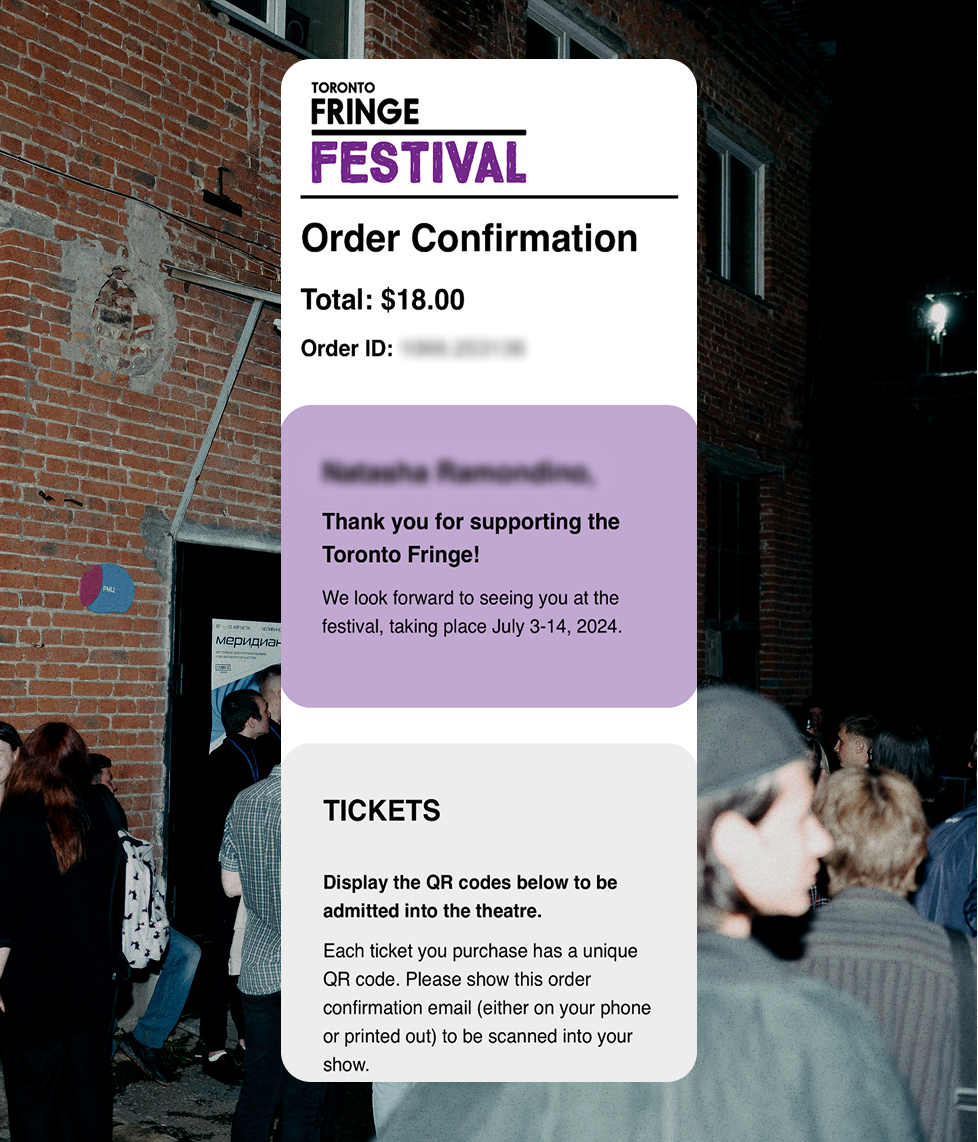
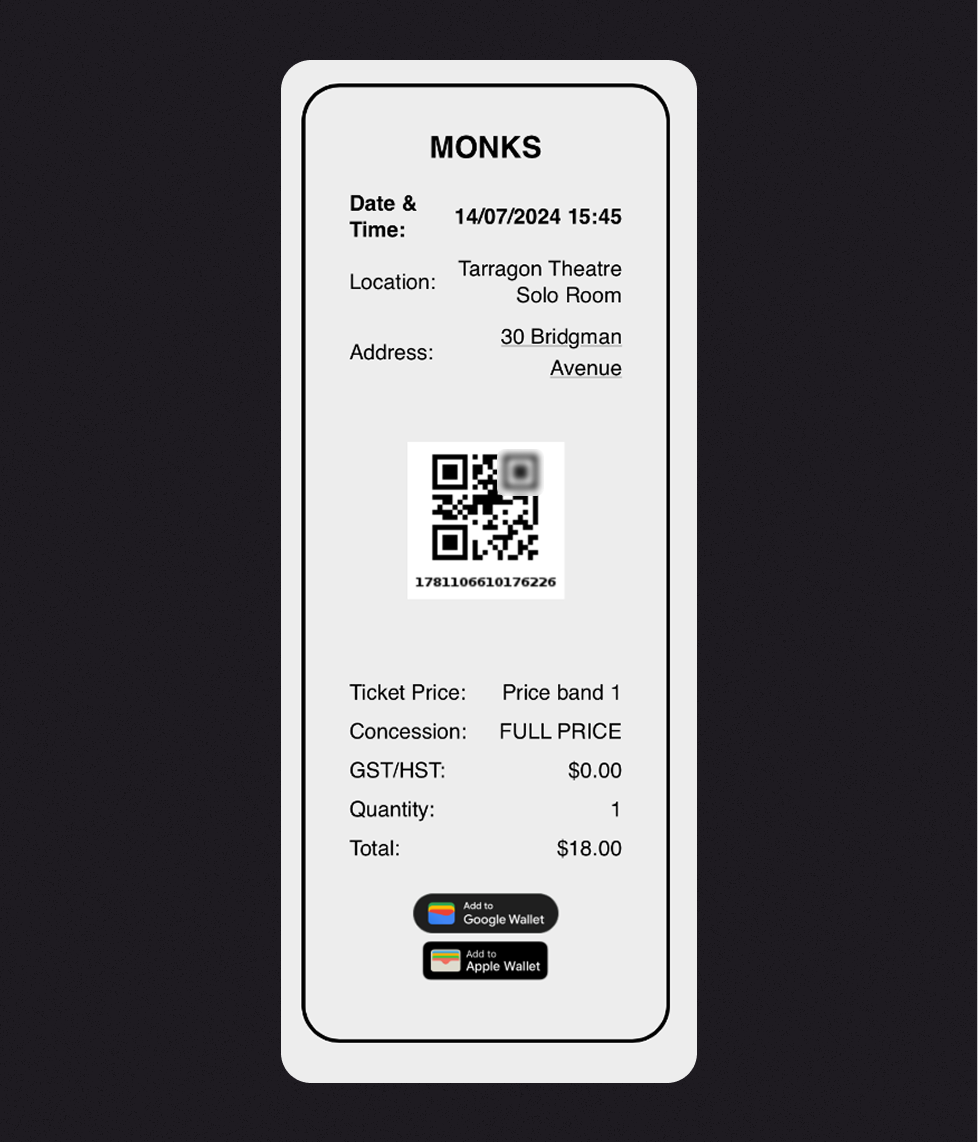
The e-ticket system and email communication design proved to facilitate a smooth and considered user journey from site to seat.
Founded in the summer of 1989, The Toronto Fringe Festival is a vibrant celebration of artistic expression, showcasing over 70 performances across multiple venues and running for two weeks annually. The Toronto Fringe has seen many success stories and proves year after year to be a pillar for live arts and culture in the city so, like many other arts and non-profit organizations, updating and maintaining its end to end audience experience has been paramount to the continued success of the festival and its artists.
As a performing arts worker, I have witnessed the systemic pressures facing the arts and culture sector in Canada since the pandemic. Combined with an economic recession, theatres have had to grapple with dwindling subscribers and a diminished audience base. From an audience perspective, whether it be a symptom of current circumstances or an attempt to overcome them, broadly speaking, live arts in Canada is mostly financially and culturally inaccessible.
A beacon of hope is the mighty Fringe Festival. The Fringes programming is chosen from a pool of independent producers through a lottery system. This system puts some agency back into the hands of the creators, leading to more innovative and relatable work that is in touch with its communities. Additionally, the Fringes ticket prices have always been some of the lowest in live arts, bringing in audiences from classes who are mostly excluded from other arts institutions.
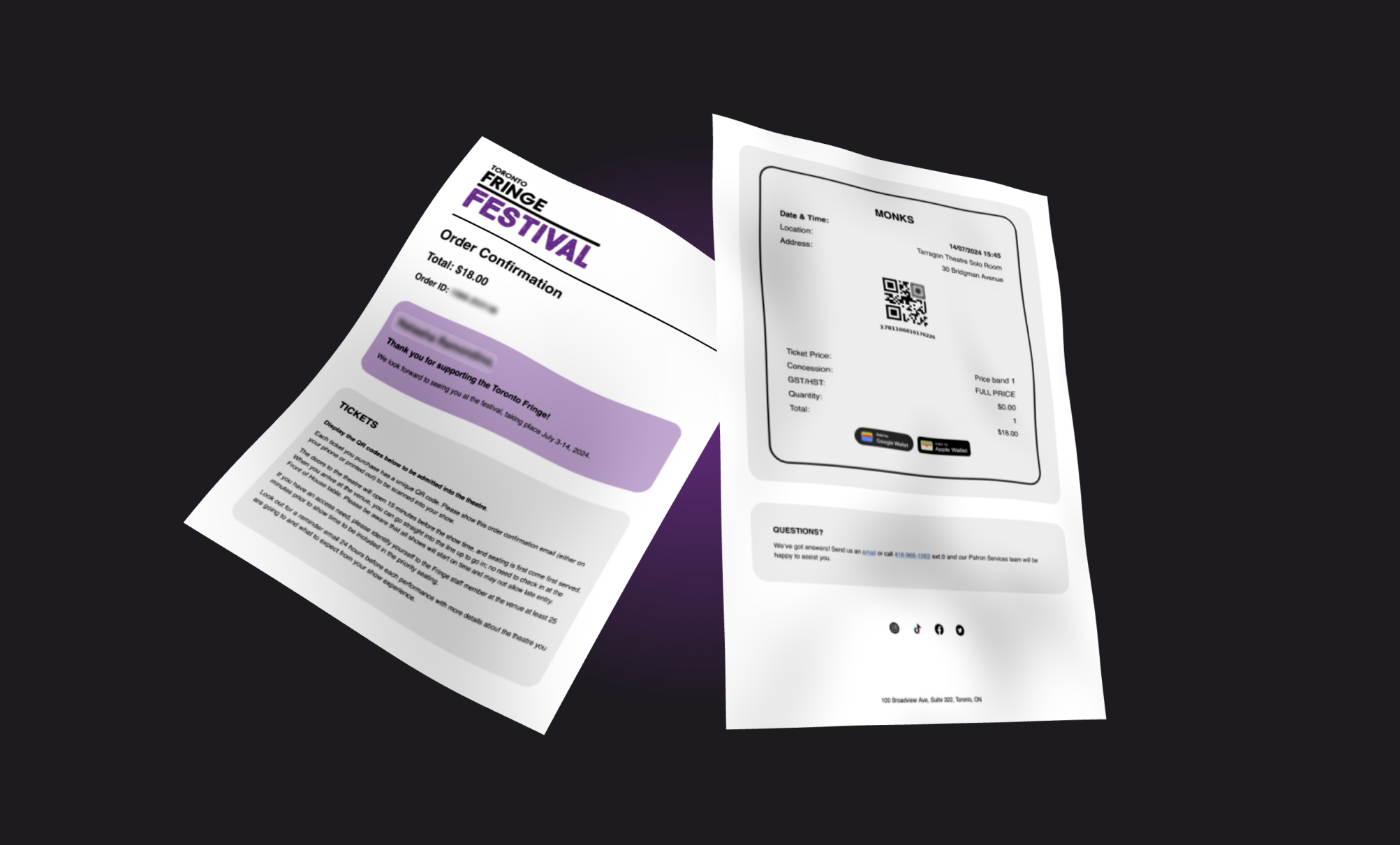
Using basic HTML, CSS, and dynamic tags, a lightweight template created to pull relevant user account information from java based ticketing software, Red61, proved to be a catch all approach to ticket delivery. As well as ticket delivery, this template was also used to pull show-specific tags such as warnings, venue address, and accessibility features, ensuring patrons received all necessary information 24 hours before their performance.
Given the festival’s scale, this system needed to coordinate seamlessly with multiple performances, tickets, and patron accounts, making lightweight and adaptive design essential. Considering not all patrons use mobile devices, it was equally as important to design the templates for at home printing.
Mapping out the key user groups interacting with the ticketing system, including audience members, ushers, artists, and production staff, ensured that cross-festival needs and expectations were comprehensively addressed. The results of this research and execution proved to aid in the highest audience turnout since 2019.